 Dronecode spent November 6 to 8 at Stanford as a sponsor and mentor for Horizons DroneHacks 2026, a 48-hour autonomous flight hackathon presented by the Stanford Robotics Center. The event brought 100 students from 28 universities to campus, with travel funded for every accepted participant. Rothberg Catalyzer was the headline supporter, and Dronecode joined Wing, Neros Technologies (Dronecode Silver Member), Boeing, Skydio, Perennial Autonomy, Anduril Industries, CX2, and Ondas on the sponsor list.
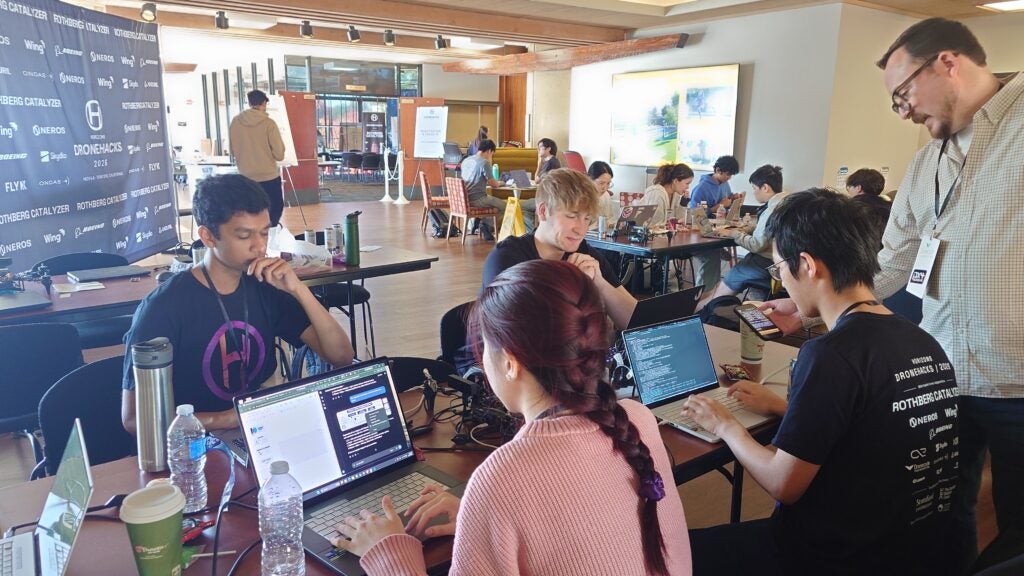
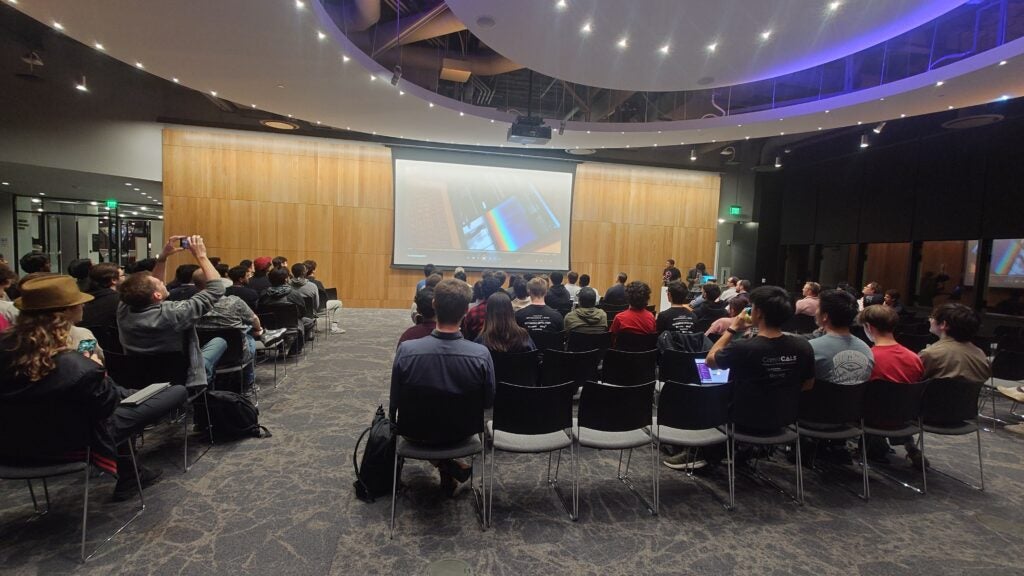 The organizers reported more than 200 test flights across the weekend, and the room looked like it. Tables of drone parts, open toolkits, and laptops full of terminal windows filled the space from Friday through Sunday.
The Challenge
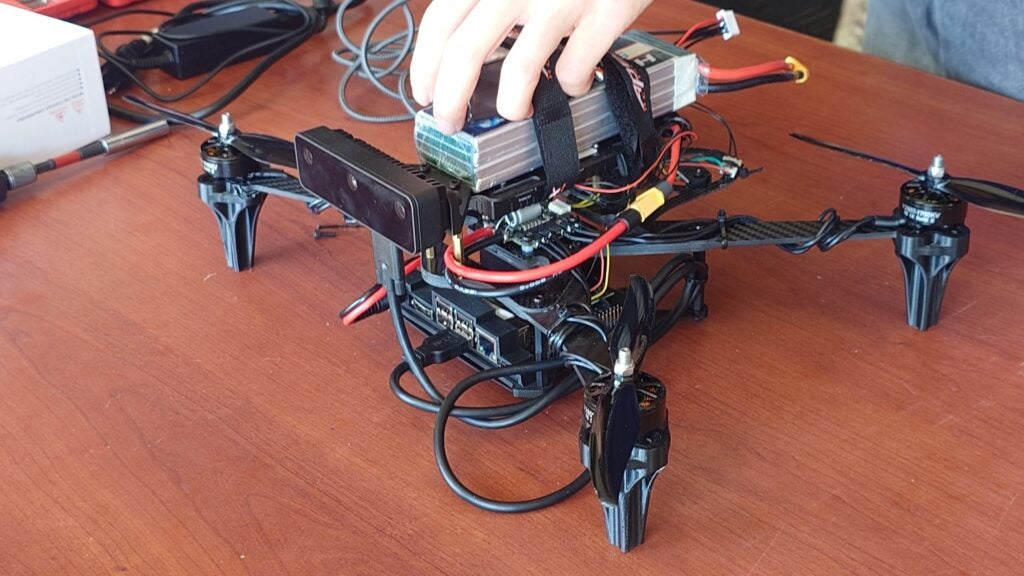
Every team received the same 7-inch quadcopter kit built by the Drone Hacks team and competed on software alone. Each kit carried a Pixhawk 6C flight controller, a Luxonis OAK-D, and an NVIDIA Orin Nano as the companion computer. The task was GPS-denied flight. Teams had to write the perception, navigation, obstacle avoidance, and/or decision-making that would get the drone through an indoor course and map it without a positioning fix.
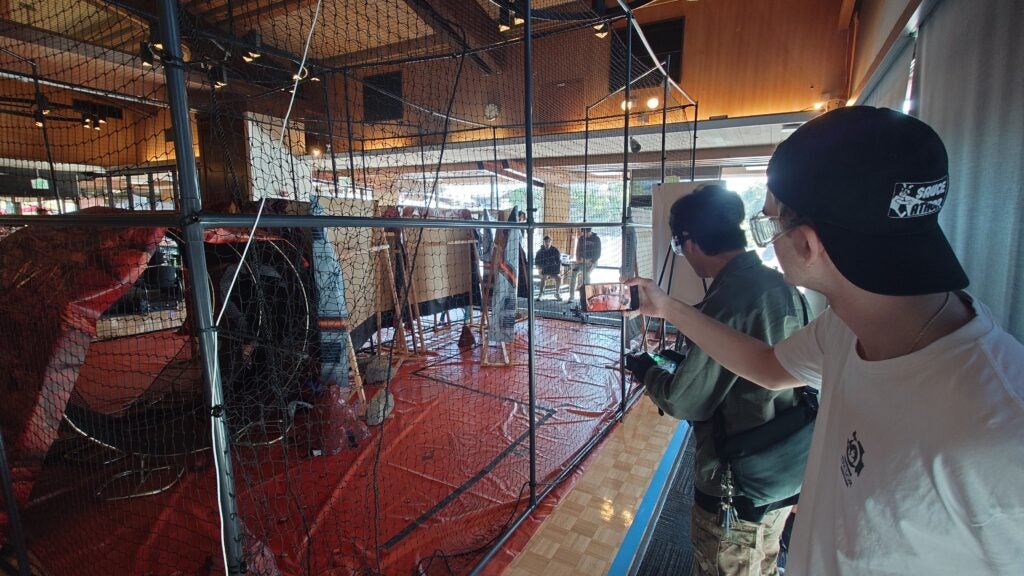
Flight testing ran inside a netted cage on the venue floor, with plywood obstacles arranged on a red mat. Teams queued for cage time, flew, pulled logs, and went back to their tables to fix what broke. Crashed frames and swapped propellers were part of the weekend.
 Dronecode on the Floor
Ramón Roche, Executive Director of the Dronecode Foundation, mentored teams and served as a judge for the final presentations. Mike Pehel, Dronecode’s Content Director, mentored alongside him. Much of that mentoring was pointing teams to the open source PX4 and ROS tools already available to them, so they could spend their time on the autonomy problem rather than rebuilding the stack underneath it.
 Final Presentations and Awards
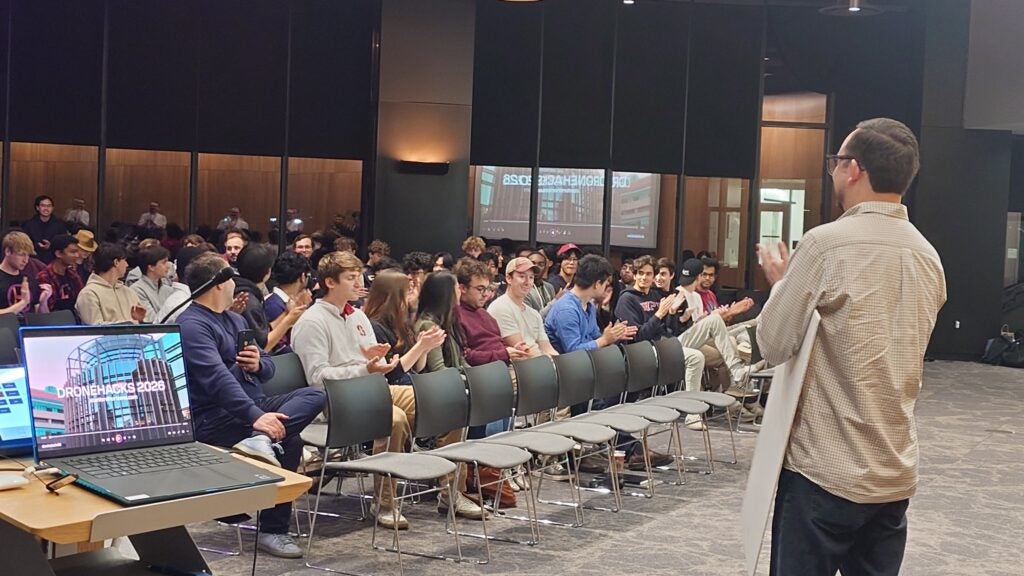
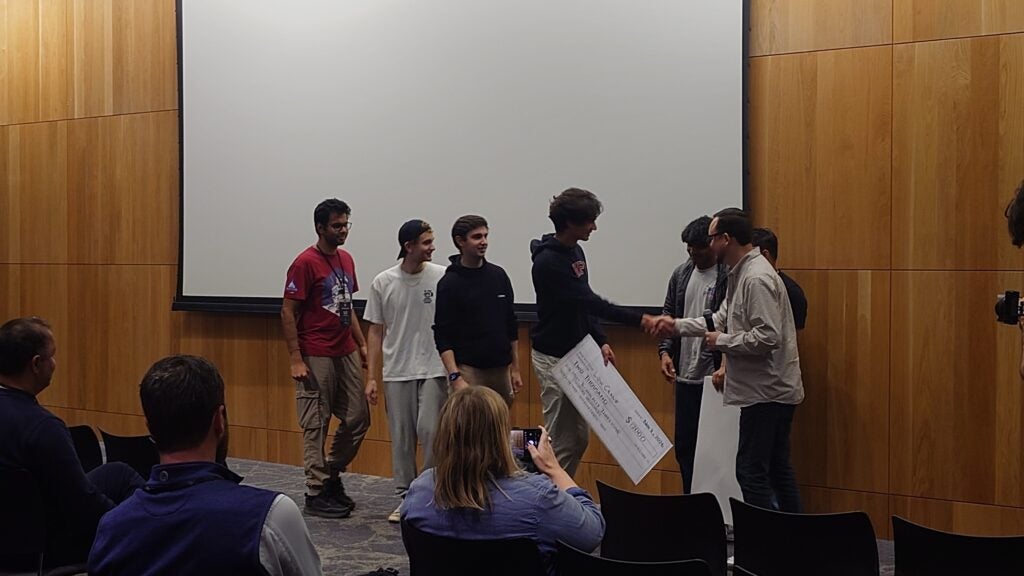
Sunday evening, every team presented its run to a full auditorium and a panel of judges. The event awarded more than $15,000 in prizes for 1st, 2nd, and 3rd place, but also for innovation.
 Thank You
Thank you to the student organizing team, led by Student Director Artash Nath and Associate Student Director Anish Bayya, with Kelvin Nguyen, Julia Jiang, Khush Lalchandani, Guilherme Bonfim, James Gu, Jess Yang, Rohan Bhowmik, Iris Xu, Gregory Li, and Victor Chen. You built an event that put real hardware in the hands of 100 students and gave them a weekend to make it fly.
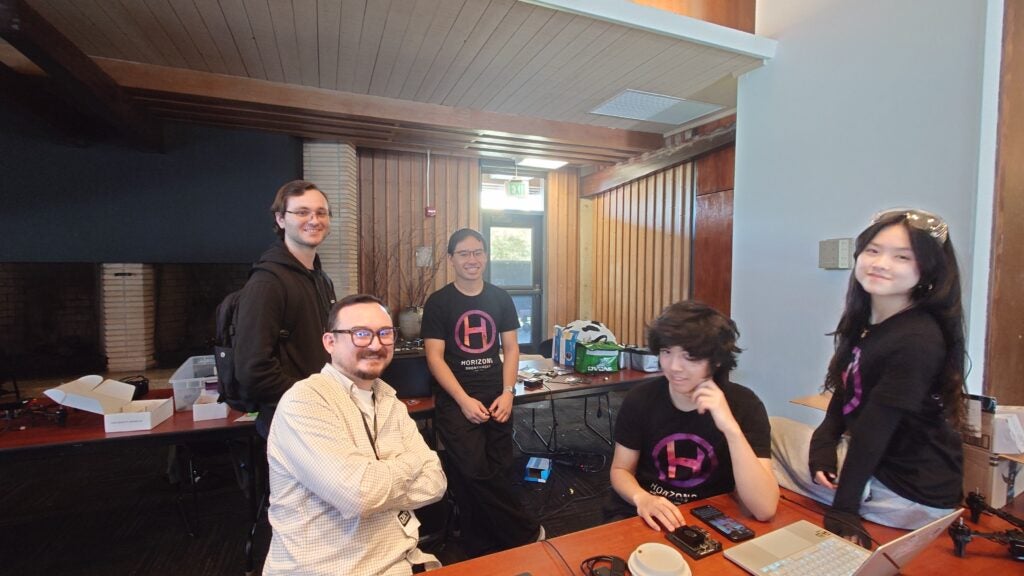 Thank you to the Stanford Robotics Center, the Stanford Robotics Club, the Stanford Computer Forum, and the Stanford School of Engineering for backing the event, and to the staff and faculty advisors who supported the students: Steve Cousins, Trudy Gonzalez, Eiko Rutherford, and Steve Collins.
Thank you to Rothberg Catalyzer and to every sponsor who helped bring DroneHacks to life.
And thank you to the students. Three days of debugging, repairs, and test flights is hard work, and the presentations on Sunday showed how much of it paid off.
If your university runs a drone or robotics competition, Dronecode wants to hear about it. Reach us on the Dronecode Discord or at the Dronecode website.